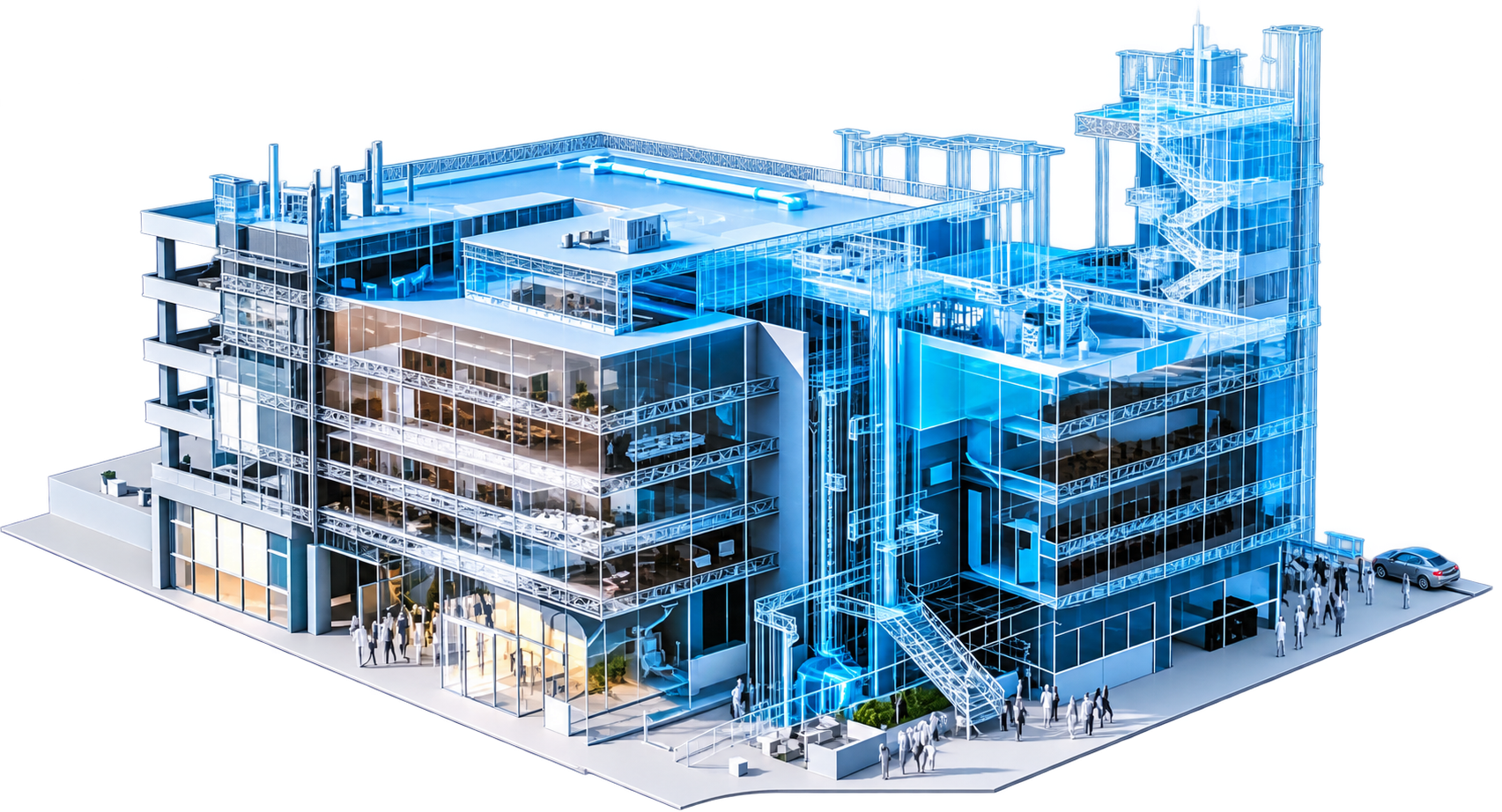
How coordinated BIM workflows improve project visibility, coordination and decision-making
Building projects involve multiple disciplines, teams and stages. When design information is spread across different drawings, models and systems, coordination can become challenging. Building Information Modelling (BIM) brings this information into a more structured and connected environment.
But BIM is more than creating a 3D model. When implemented effectively, it can become a practical way to improve how project teams plan, communicate, coordinate and deliver.
“What Makes BIM Valuable?
A well-developed BIM model brings together geometry and relevant project information in a coordinated digital environment. This gives architects, engineers, contractors and other stakeholders a clearer understanding of the project before work begins on site.
With better access to coordinated information, teams can identify potential issues earlier, review design options and make decisions with greater confidence.”
Improving Multidisciplinary Coordination
Modern projects often involve architectural, structural and MEP systems working within the same space. Without proper coordination, conflicts can remain hidden until later stages.
BIM allows different disciplines to be brought together and reviewed within a common model. Clash coordination can help identify conflicts between systems and give teams an opportunity to resolve them before they affect construction.
This can contribute to fewer site-level coordination issues, better communication and a more predictable workflow.
Better Project Visibility
One of the key advantages of BIM is the ability to visualise a project beyond traditional drawings.
A detailed 3D model can help teams understand:
- Spatial relationships between different systems
- Design intent and project requirements
- Areas requiring further coordination
- Construction sequences and planning considerations
- Changes made throughout the project
This shared visual understanding can make communication easier between project stakeholders.
Supporting Better Decisions
BIM can also support decision-making throughout different stages of a project.
When models are connected with time and cost information, teams can explore 4D and 5D workflows to better understand construction sequencing, quantities and project costs.
The result is a more informed approach to planning rather than relying only on isolated drawings or spreadsheets.
BIM Across the Project Lifecycle
BIM can provide value from early design through construction and beyond.
It can support:
Design — Develop and visualise project concepts.
Coordination — Bring disciplines together and identify conflicts.
Documentation — Support accurate construction drawings and project information.
Planning — Connect model information with construction sequencing and cost considerations.
Delivery — Provide structured information that supports project execution.
Making BIM Work for Your Project
The value of BIM depends on more than the software being used. Clear requirements, consistent standards, coordinated workflows and the right project information are equally important.
Every project has different requirements, which is why BIM workflows should be structured around the project’s objectives, team structure and delivery process.
At Erasmus CAD Solutions, we support clients with 3D BIM modelling, architectural and MEP design, clash coordination, construction documentation, 4D/5D simulation and BIM consultancy.
Our goal is simple: to help project teams work with better information, better coordination and greater confidence.
Looking to Improve Your BIM Workflow?
Whether you need support with BIM modelling, coordination or BIM implementation, our team can help you identify an approach suited to your project.
Other articles you might be interested